
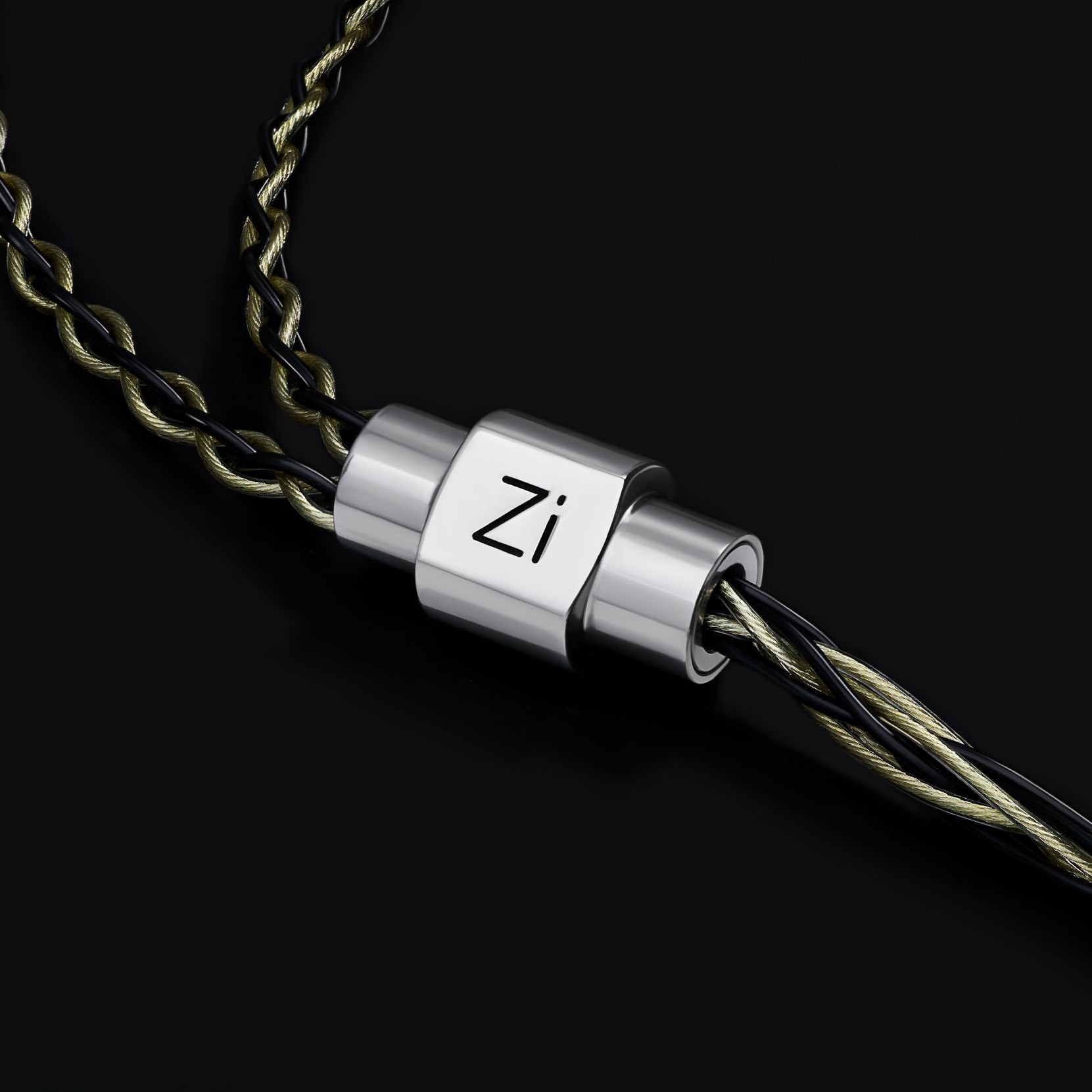
Best Cable for 64 Audio U12t: How to Choose the Right Cable for Legendary IEMs
- By zikman.audio
64 Audio U12t: IEMs You Do Not Want to “Fix”
Some IEMs are remembered for one obvious trait: huge bass, sparkling treble, or an expressive midrange. The 64 Audio U12t are different. Their strength is not a single dramatic effect, but a rare sense of balance.
The U12t do not try to prove their class in the first few seconds. They do not throw detail at you, inflate the bass for an instant wow effect, or push vocals artificially forward. Instead, they gradually show why they have remained so respected in the audiophile community: for their control, depth, precision, comfort, and ability to sound convincing with very different kinds of music.
This is one of those rare cases where IEMs feel less like a seasonal flavor purchase and more like a long-term instrument. The U12t are equally confident at home, in a portable setup with a music player, and as everyday universal IEMs.
That is why choosing a cable for the 64 Audio U12t is more delicate than it may seem. These earphones do not need to be “fixed” or turned into something else. A good U12t cable should work with restraint: preserve the character of the U12t, while helping them open up with a little more freedom, depth, and refinement.
The best cable for U12t is not the one that announces itself the loudest. It is the one that lets the earphones remain themselves — while making it hard to go back to the previous cable.
What to Understand About the Stock U12t Cable
Stock cables supplied with expensive IEMs are often judged unfairly. It is easy to call them the “weak point,” but in most cases that is not quite right. A stock cable is not necessarily a bad cable. It is a universal bundled solution.
The manufacturer has a difficult task: to make the cable reliable, comfortable, compatible with most use cases, and not push the total package price even higher. Such a cable has to work for different owners, different sources, different fits, and different listening habits. It has to be a safe choice, not a personal tuning tool for one specific listener.
In that sense, the stock 64 Audio U12t cable does its job. It lets you listen to the earphones straight out of the box, keeps the system simple, and does not force the owner to make extra decisions on day one.
But every universal solution has its natural limit. A bundled cable is not required to unlock the full potential of high-end IEMs, because cable choice is already a matter of personal matching. One U12t owner may use a portable player with a 4.4 mm output. Another may use a compact DAC. A third listens at home from a desktop amplifier. A fourth wants a softer fit around the ear. A fifth is looking for a little more tone, air, or scale.
So replacing the U12t cable is not about moving from a “bad” stock cable to a “good” one. It is about moving from a universal bundled solution to a cable that fits your system, your fit, and your taste more precisely.
Why the U12t Respond So Clearly to Cable Choice
The 64 Audio U12t are high-end in-ear monitors with 12 balanced armature drivers per side. This is a technically mature model where every element feels carefully considered: the bass is fast and deep, the midrange is clean and uncluttered, the treble is extended and airy, and the soundstage is built not through exaggerated width, but through precise layering.
The U12t use a standard 0.78 mm 2-pin connector. This is an important practical detail: when choosing a cable, you need a 64 Audio 2-pin cable, not MMCX, QDC, or another format. The 2-pin fit also matters. A good cable should insert firmly, without play, but without requiring excessive force. With expensive IEMs, this is not a minor detail — it affects comfort, reliability, and the long-term life of the connector.
The U12t do not need a lot of power, but they are sensitive enough to reveal the quality of the whole chain. A low noise floor, stable contact, clean soldering, sensible cable resistance, and proper conductor geometry matter more here than vague promises of “more soundstage” or “twice the detail.”
It is also worth mentioning LID — Linear Impedance Design. This technology helps the U12t maintain a more stable frequency response with different sources, especially in cases where the output impedance of an amplifier can affect multi-driver balanced armature IEMs. But LID does not make cable and source quality irrelevant. It reduces the risk of tonal shifts, but it does not make the system completely insensitive to materials, construction, contacts, and overall execution.
That is why a cable for U12t should not be a blunt correction tool. It is closer to the final adjustment in an already well-built system: it does not rewrite the music, but removes unnecessary limitations between you and the recording.
What Kind of Cable Sound Suits the 64 Audio U12t?
The U12t are neither dark nor bright. They do not sound sterile, but they also do not sink into heavy warmth. Their character is mature: the bass is quick and dense, the midrange is even and clean, and the treble is open without becoming aggressive. For that reason, a cable should be chosen not by the rule of “the bigger the change, the better,” but by how precisely it matches your taste.
If you want more body, depth, and tonal richness, copper-based cables are the natural direction. They can add a greater sense of weight and musical fullness to the U12t, especially with vocals, jazz, rock, acoustic recordings, and live instruments.
If you want versatility, clarity, and a little more air, a copper-and-silver hybrid is the more logical choice. This type of cable helps preserve the foundation while adding speed, transparency, and more precise spatial definition.
If your system is already built at a high level and you want a more flagship feel — more scale, more fluidity, more refined smoothness, and better microdynamics — premium hybrids with gold-plated silver are worth considering.
For the 64 Audio U12t, the Zikman lineup naturally points toward three directions: Rhine, Tiber, and Arno.
Zikman Rhine: More Body, Depth, and Tonal Beauty
Sometimes the U12t impress technically, but the heart wants a little more warmth. Not muddiness, not smoothing, not “tube-like” coloration for its own sake — but real weight: denser vocals, a more grounded bass foundation, and instruments with a more tangible body.
In that scenario, the first candidate is Zikman Rhine.
With the U12t, this cable works as a way to add musical maturity. It does not break the signature speed and control of 64 Audio. It does not turn the U12t into dark earphones, and it does not hide their resolution. Its role is to make the presentation feel more grounded, richer, and emotionally complete.
Rhine is especially well suited for listeners who approach music not only analytically, but physically: vocals, jazz ensembles, blues, acoustic concerts, classic rock, chamber music, and soundtracks. It suits recordings where it is not enough to simply hear the note — you want to feel the material of the instrument, the breath of the recording, the weight of the bass line, and the density of the voice.
This is a cable worth considering if the U12t sometimes feel a little cool or too neutral to you. It adds foundation without sacrificing control, which is especially valuable with U12t because their balance can be spoiled easily by excessive warmth.
Depending on the level of execution you want, there are three versions to consider:
- Zikman Rhine — the core copper version for those who want signature density, natural tone, and a strong everyday upgrade.
- Zikman Rhine Elegance — a more premium version with hand-braided Kumihimo construction and a more expressive visual character.
- Zikman Rhine Elegance Black Edition — the strictest and most visually cohesive Rhine version for those who want a deep copper presentation and a black flagship finish.
Zikman Tiber: The Most Universal Cable for U12t
If Rhine is the path toward more density and body, Zikman Tiber is the path toward balance. And perhaps that is exactly why it pairs so naturally with the U12t.
Tiber is the cable to choose when you do not want to push the earphones toward either warmth or brightness. You like the signature U12t character, but you want a little more maturity across the whole presentation: clearer contours, better separation, a more organized stage, tighter bass, and a freer top end.
With many good IEMs, versatility can sound like compromise. With the U12t, versatility is part of their nature. They handle electronic music, progressive rock, metal, jazz, vocals, classical, ambient, live recordings, and modern pop with equal confidence. That is why the best cable for U12t will often need to be just as versatile.
The Tiber variations fit this scenario well. They do not pull attention toward themselves or make you listen to the cable instead of the music. Instead, they help the system sound more coherent and assured.
With the U12t, Tiber can bring a more controlled low end, clearer articulation, more precise instrument separation, and more air in the upper range. This becomes especially noticeable in complex arrangements, where a weaker cable can make the presentation feel slightly flat or congested.
If you are looking for the best cable for U12t and do not want to miss the mark tonally, Tiber is the safest and most logical choice.
Available options:
- Zikman Tiber — a universal copper-and-silver hybrid for balance, air, and precision.
- Zikman Tiber Elegance MK2 — a more flagship-level Tiber with hand braiding, premium hardware, and the feel of a more complete high-end cable.
Zikman Arno: When U12t Become Part of a Flagship System
There is a point where an upgrade is no longer about trying to improve something. It becomes about completing the system. This happens often with U12t owners. These earphones are rarely bought by accident. People choose them for the long term, then match them with a source, ear tips, apex modules, a case, and finally a cable. Over time, they become not just a pair of IEMs, but a personal instrument for music.
This is where Zikman Arno comes in.
Arno is a flagship cable not because it is the most obvious, but because it is the most mature. With the U12t, it is interesting precisely because it does not try to make the presentation more spectacular. Its strengths are scale, fluidity, smoothness, microdynamics, and the sense of a higher-class system.
If Rhine adds body and Tiber reveals versatility, Arno works with space and refinement. It can make the stage feel deeper, the edges of instruments more natural, the treble smoother, and the overall picture more open and more luxurious in feel.
This type of cable is especially strong with acoustic music, orchestral recordings, jazz, vocals, fusion, progressive, live albums, and anything where atmosphere matters as much as frequency balance. With Arno, the U12t can sound not only detailed, but more expressive: less mechanical, more breathing.
Arno is the choice if the U12t are the center of your portable or home high-end system, and you want not an intermediate upgrade, but a final solution.
Available options:
- Zikman Arno — a flagship hybrid of copper and gold-plated silver for musicality, resolution, and a smooth premium presentation.
- Zikman Arno Elegance — a more artistic Arno version with hand-braided Kumihimo construction and maximum attention to aesthetics, tactility, and build.
How to Choose Between Rhine, Tiber, and Arno
The choice between these cables should not start with price. It should start with what you want to hear from your U12t.
If you want more density, weight, tone, and musical warmth, choose Rhine. This is the cable for listeners who value emotional completeness and a calm, rich presentation.
If you want the most universal U12t cable, choose Tiber. It preserves the balance of the U12t while adding transparency, structure, and confidence without pushing the sound too far in one direction.
If you are building a flagship system and want maximum scale, stage depth, smoothness, and a premium feel, choose Arno.
In simple terms:
Rhine — when you want more body.
Tiber — when you want the best balance.
Arno — when you want a finished high-end level.
A Small Technical Checklist Before Buying a U12t Cable
Before ordering a cable for the 64 Audio U12t, it is worth checking a few details. They are simple, but they are exactly what separates a well-matched cable from a beautiful accessory.
First, you need the correct connector: 0.78 mm 2-pin. The connectors should be compatible with 64 Audio shells, insert straight, and avoid putting stress on the sockets.
Second, choose the plug for your real source: 3.5 mm if your main output is single-ended, or 4.4 mm balanced if your player, DAC, or amplifier has a genuinely good balanced output.
Third, pay attention to ergonomics. With sensitive IEMs, cable noise, stiff braiding, or heavy ear sections can become more distracting than small tonal differences. The U12t are often used for long listening sessions, so cable softness, weight, and around-the-ear comfort directly affect listening pleasure.
Fourth, think about how the cable works with your apex modules. If you often use m20 and enjoy a denser low end, an overly dark cable may be too much. If you prefer m15 or a more open presentation, a copper cable can add a welcome foundation. If you want to preserve versatility, a hybrid like Tiber is often the most logical answer.
Fifth, do not judge a cable by material alone. Copper, silver, and gold-plated silver matter, but so do construction, geometry, soldering quality, hardware, flexibility, contact stability, and how comfortable the cable feels to you.
Finally, pay attention to our individual Cable ID. For a premium cable, this is not just a decorative detail. It is a way to identify the exact build, configuration, and history of the piece. When a cable is made for specific IEMs and a specific owner, this identification helps preserve the feeling of a personal product rather than an anonymous accessory.
Can You Order a Custom U12t Cable?
Yes. For the 64 Audio U12t, you can order a Zikman cable in the configuration you need: 0.78 mm 2-pin connectors, a 3.5 mm or 4.4 mm balanced plug, custom length, selected hardware, comfortable over-ear fit, and visual design matched to your setup.
This matters especially with the U12t, because these IEMs are often used for hours — at home, on the road, in the studio, or with a high-quality portable player. We can adapt the cable to your source, your wearing habits, and your preferred sound: a denser and more musical system with Rhine, a more universal and balanced one with Tiber, or a more premium and spacious one with Arno.
Instead of buying a ready-made cable blindly, you get personal matching, customization, and premium Zikman service.
Conclusion: The Best Cable for U12t Is the One That Does Not Fight the Earphones
The 64 Audio U12t are not IEMs for a random upgrade. They are too well balanced to be changed by force. They do not need to be remade — they need to be revealed.
A good U12t cable should act like a good partner in the system: it should not pull attention away, break the balance, or add artificial effect. It should help the music sound freer and more natural.
If you want more body, choose Rhine.
If you want a universal 64 Audio cable for everyday use, choose Tiber.
If you want a flagship cable for a finished high-end system, choose Arno.
Zikman offers premium cables for 64 Audio U12t with individual configuration, personal matching, and attentive service. We will help you choose the material, plug, length, and configuration for your source, fit, and sound preferences.
Need a cable for 64 Audio U12t? Message us at team@zikman.audio — we will help you choose Rhine, Tiber, or Arno for your source, 3.5/4.4 connection, and preferred sound character.

We will answer all your questions about IEM cables and help you determine exactly what you need