
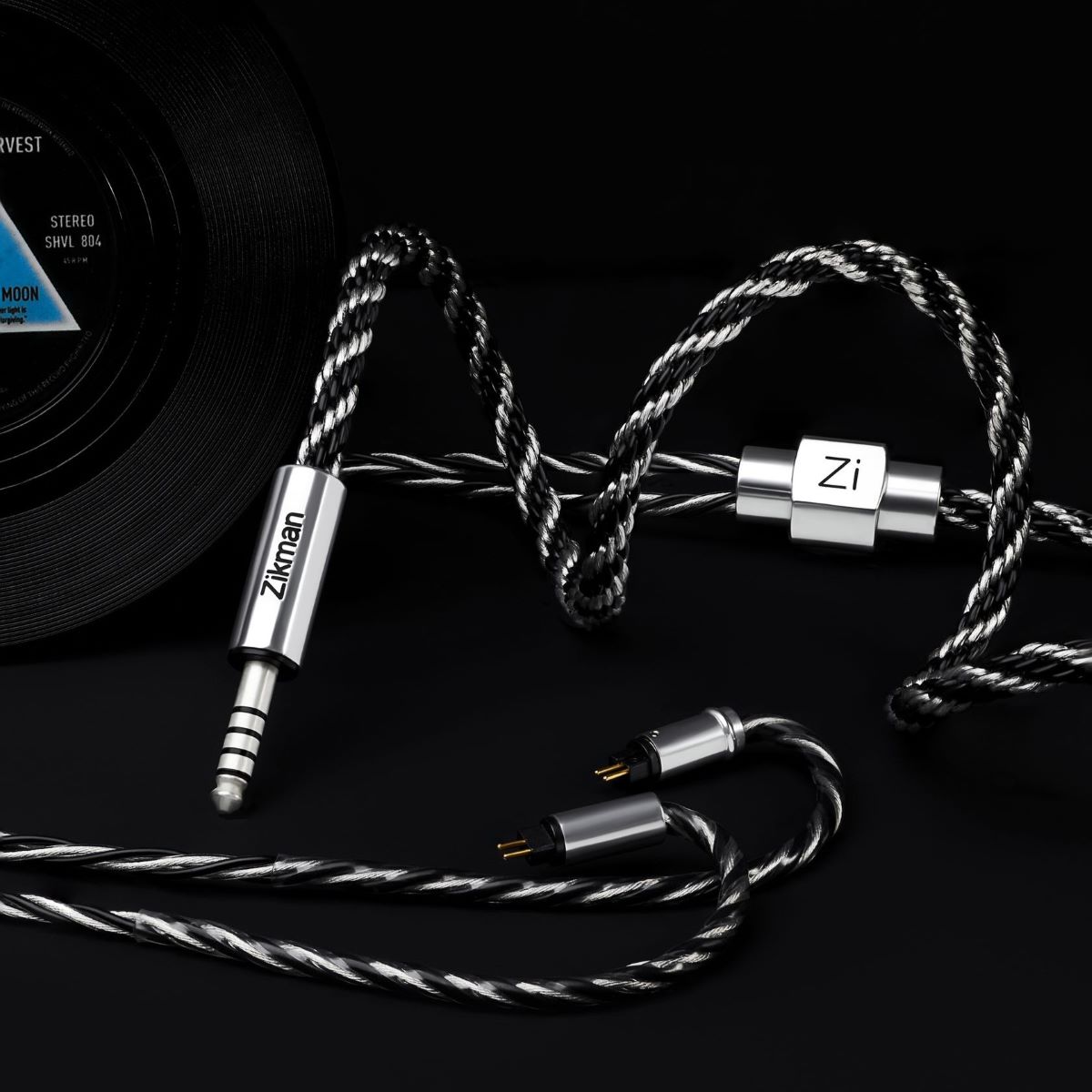
Copper vs Silver-Plated vs Silver Audio Cables: How to Choose the Right Cable for Headphones and IEMs
- By zikman.audio
Choosing an audio cable rarely starts with theory. Most buyers have a much more practical question: should they choose copper, silver-plated copper, silver, or a hybrid cable — and where does a sensible upgrade end and overpaying begin?
A cable will not completely transform your headphones. It will not fix a poor IEM fit, a weak source, or a mismatched amplifier. But a well-built cable can fine-tune a system: improve ergonomics, reduce microphonics, provide more reliable connectors, and slightly shift the perceived tonal balance, density, attack, and clarity.
The key is to choose the material not by status, but by purpose. Here is a practical guide to copper, silver-plated copper, silver, and hybrid headphone cables.
Quick Comparison: Copper, SPC, Silver, and Hybrid
| Material | Best for | Sound character | Best use case |
| Copper | Listeners who want body, naturalness, and comfort | Warmer, denser, fuller | Bright IEMs, vocals, jazz, rock, long listening sessions |
| Silver-plated copper / SPC | Listeners who want more clarity without moving into high-end pricing | More open, faster, brighter | Darker or thicker IEMs, portable setups |
| Pure silver | Listeners with refined high-end systems | Air, microdetail, speed, separation | Flagship IEMs and transparent sources |
| Hybrid | Listeners who want balance | Copper body + silver clarity | A versatile upgrade across genres |
Why Cable Material Matters, But Does Not Decide Everything
Silver conducts slightly better than copper, which is why it is often positioned as the more premium option. But a real audio cable is not just a piece of metal. Gauge, strand count, braiding geometry, insulation, resistance, soldering quality, connectors, and flexibility all affect the final result.
That is why two copper cables can feel and sound different. One may be smooth and relaxed, while another may feel faster and more controlled. The same applies to SPC and hybrid designs. Material sets the direction, but the full construction determines the outcome.
The practical question is: what exactly do you want to improve in your system? If you want more body, look at copper. If you want more air and definition, look at SPC, silver, or a hybrid. If you want a balanced upgrade without pushing the sound too warm or too bright, a hybrid cable is often the safest choice.
Copper Headphone Cables: When to Choose Copper
Copper is the most straightforward and reliable choice for most users. It works well for everyday listening, avoids making the sound aggressive, and usually offers the best balance of price, comfort, and musicality.
A copper cable is a strong choice when your system sounds dry, thin, or fatiguing. It can add a sense of weight, a more natural midrange, and a calmer presentation. Copper is especially useful with IEMs that have an energetic upper midrange or bright treble.
In the Zikman range, the entry point for copper cables is Zikman Danube — 7N OCC Copper Litz Pure Cable. It is a logical choice for listeners who want a natural, balanced, non-aggressive sound without stepping into expensive flagship options.
For a more serious copper upgrade with greater weight, depth, and control, consider Zikman Rhine — 7N OCC Pure Copper IEM Cable. This is more than a stock-cable replacement. It is a full upgrade for listeners who prefer a rich, dense, emotionally engaging presentation.
Silver-Plated Copper: When SPC Is Better Than Pure Copper
Silver-plated copper, or SPC, uses a copper conductor with a silver coating. It is often chosen as a middle ground between classic copper and pure silver.
SPC suits listeners who want more clarity, speed, and openness without moving into the cost of pure silver. It is especially relevant for IEMs with a warm, thick, or slightly closed-in sound. SPC can make the presentation feel cleaner, add more light in the upper range, and sharpen the outline of instruments.
In the Zikman line-up, this role is covered by Zikman Seine — 6N Silver Plated Copper (SPC) IEM Cable. It is a good option for listeners who want more air and detail while keeping the cable practical for daily use.
SPC is not the best blind choice if your headphones are already bright or prone to sibilance. In that case, start with copper or a smoother hybrid instead.
Pure Silver and Hybrids: When You Need a Higher-Level Upgrade
Pure silver is usually not a first upgrade. It makes more sense as a final tuning step when you already have strong IEMs, a quality DAP or amplifier, and a clear goal: more transparency, speed, microdetail, and spatial separation.
But pure silver is not always the best answer. If your system is already analytical, it may push the sound too far toward brightness or sharpness. For many listeners, a hybrid design is more practical: copper preserves body and saturation, while silver adds clarity, control, and air.
In the Zikman range, the hybrid approach begins with Zikman Tiber — Hybrid 7N OCC Copper and Silver Cable. It is designed for listeners who do not want to choose between copper body and silver resolution. It works well as a versatile upgrade for mid-range and higher-end IEMs.
Above it sits Zikman Tiber Elegance MK2 — Flagship Hybrid OCC Copper & Silver Audiophile Cable. This is a flagship hybrid for systems where scale, texture, control, and fine detail matter.
Zikman Price Ladder: How to Choose by Budget
Instead of using abstract price ranges, it is more useful to look at the actual product matrix. This makes it easier to understand where a rational upgrade sits and where premium system tuning begins.
| Level | Model | Material / concept | Best for |
| €199 | Zikman Danube | 7N OCC copper litz | First serious upgrade, natural and comfortable presentation |
| €279 | Zikman Seine | 6N silver-plated copper | More clarity, air, and speed without a high-end budget |
| €349 | Zikman Rhine | 7N OCC pure copper | Denser, deeper, more authoritative copper sound |
| €499 | Zikman Rhine Elegance | 7N OCC copper, hand-braided | Copper character with hand-braided construction and premium aesthetics |
| €549 | Zikman Tiber | Hybrid 7N OCC copper & silver | Balance of body, clarity, and versatility |
| €599 | Zikman Rhine Elegance Black Edition | 7N OCC copper, black hardware | Copper presentation in a bolder flagship-style finish |
| €849 | Zikman Tiber Elegance MK2 | Flagship hybrid OCC copper & silver | High-end IEMs, more scale, control, and resolution |
| €1,399 | Zikman Arno | Hybrid copper & gold-plated silver | Flagship musicality, wide staging, smooth detail |
| €1,899 | Zikman Arno Elegance | Hybrid copper & gold-plated silver, Kumihimo | Ultra-premium level: sound, craftsmanship, and collectible aesthetics |
How to Read This Ladder
For a first upgrade from a stock cable, start with Danube or Seine. Danube is the better choice for a warmer, more natural result. Seine is the better choice if you want more clarity and lightness.
If you already know you want a copper sound at a higher level, Rhine or Rhine Elegance is the more logical step. Here you are not just paying for the material, but for more serious construction, presentation, and finish.
If you want versatility, Tiber is the practical entry into the hybrid philosophy. It avoids going too far into either copper warmth or silver brightness.
Tiber Elegance MK2, Arno, and Arno Elegance are no longer “try a different cable” purchases. They are precision upgrades for expensive systems and should be chosen around specific IEMs, sources, music preferences, and expectations for craftsmanship.
How to Choose a Cable for Your IEMs
For bright balanced-armature IEMs, copper is usually the safer match. It can make the sound fuller and more comfortable without adding extra upper-midrange energy. In this scenario, Danube, Rhine, or Rhine Elegance will usually make more sense than SPC.
For darker, bassier, or slightly closed-in IEMs, start with Seine or Tiber. SPC adds light and speed, while a hybrid cable gives a more balanced improvement without overemphasizing the top end.
For neutral high-end IEMs, look further up the range: Tiber Elegance MK2, Arno, or Arno Elegance. At this level, the cable is not used to fix a problem. It is used to reveal more of the system’s potential: staging, microdynamics, separation, and tonal refinement.
For everyday portable use, ergonomics still matter. A good cable should be soft, quiet when moving, comfortable around the ear, and available with the correct connector: 2-pin, MMCX, QDC, IPX, or Pentaconn Ear.
Decision Table: Quick Recommendations
| Your situation | Recommended cable |
| You want a safe first upgrade | Zikman Danube |
| You want more clarity and air | Zikman Seine |
| You want a dense copper presentation | Zikman Rhine |
| You want hand-braided premium copper | Zikman Rhine Elegance |
| You want a balance of copper and silver | Zikman Tiber |
| You have a high-end system and want more scale | Zikman Tiber Elegance MK2 |
| You want flagship hybrid tuning | Zikman Arno |
| You want the maximum: sound, craft, and aesthetics | Zikman Arno Elegance |
Common Buying Mistakes
The first mistake is buying the most expensive cable without knowing the goal. If your system is already bright, moving toward silver or a silver-focused hybrid may make it more fatiguing.
The second mistake is ignoring comfort. For IEMs, a cable must not only use the right material; it must also be light, flexible, quiet when moving, and compatible with your connectors.
The third mistake is expecting a cable to completely change the nature of your headphones. A cable is a final tuning tool. If you fundamentally dislike the tonal balance of your IEMs, start with ear tips, source matching, or different headphones first.
Final Recommendation
The best cable is not the most expensive one. It is the one that completes your system. Tell us your IEM model, source, preferred connector, and what you want to change in the sound — and we will help you choose between copper, SPC, silver, and hybrid without overpaying for a material you do not need.

We will answer all your questions about IEM cables and help you determine exactly what you need