
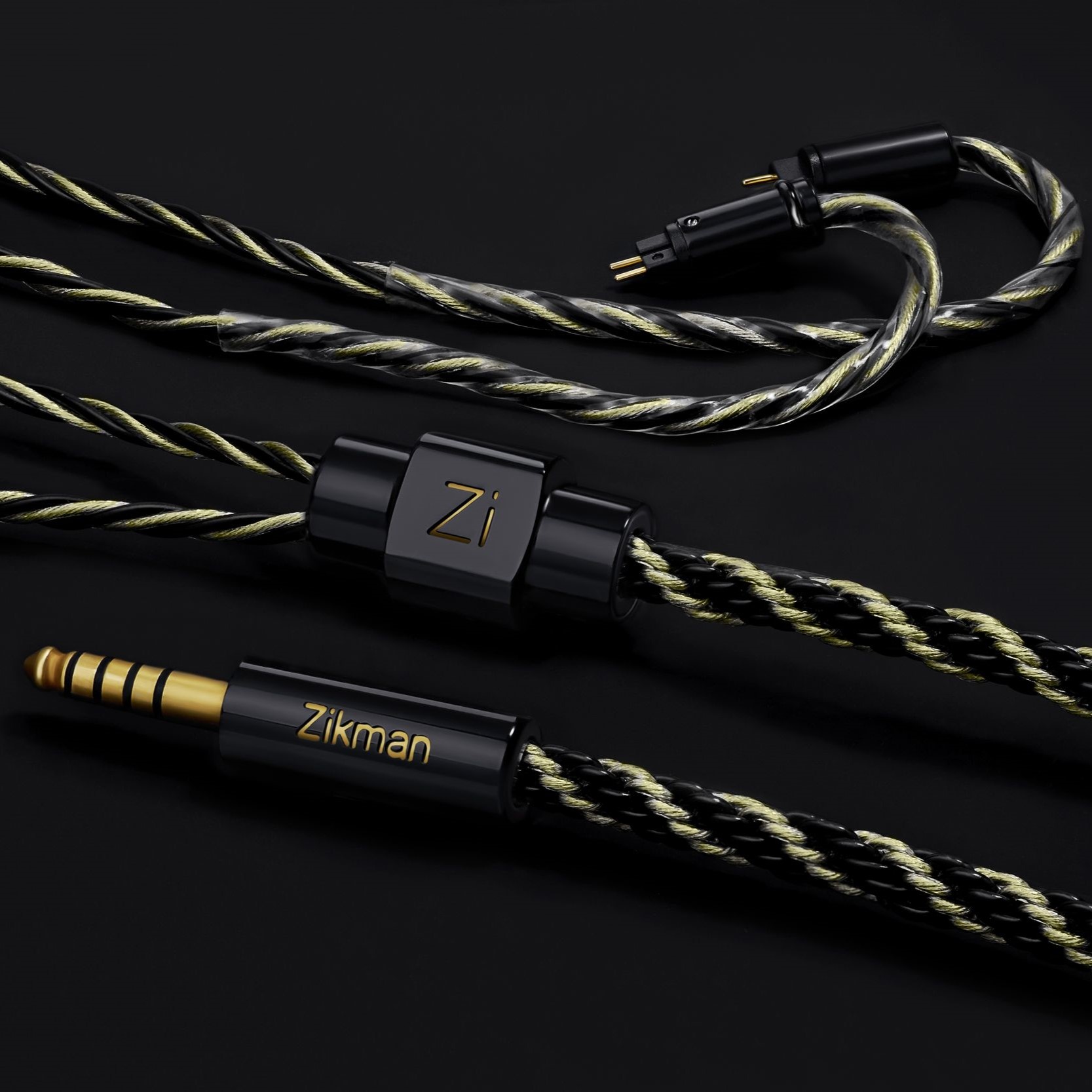
The Best Cable for the Elysian Annihilator: How to Choose a Cable for the “King of Treble”
- By zikman.audio
The Elysian Annihilator isn’t just another flagship in-ear monitor (IEM) — it’s a genuine benchmark. Since its debut in late 2019, it has earned a reputation as one of the best implementations of electrostatic drivers in the industry: reviewers call it the reference point for what top-tier treble should sound like. The current version — the 2026 Annihilator — continues that lineage: a 7-driver tribrid configuration (a custom 9.2mm LSR dynamic driver for bass, four balanced-armature drivers for the mids, and two Sonion electrostatic tweeters for the highs), tied together by a 4-way crossover, a 20Hz–45kHz frequency response, and Elysian’s signature DiVe Pass and 3D AccuPost chamber systems. This is a monitor built for precision. That’s exactly why the cable feeding it deserves the same attention as the source and DAC upstream.
Does the Cable Actually Matter?
An honest question worth answering directly before anything else. How much a conductor’s material changes the audible sound is a genuinely contentious topic, and most controlled measurements show that resistance, shielding, and termination quality matter more than simply choosing copper over silver. What isn’t up for debate is build quality, channel-matched resistance, and connector reliability — these directly affect performance, and the Annihilator is unusually sensitive to all three. At a sensitivity of 96dB/100mV and an impedance of 22 ohms at 1kHz, the Annihilator sits closer to power-hungry planar headphones than to the average balanced-armature IEM. That combination — modest sensitivity, moderate impedance, and a top end built on electrostatic drivers — makes the signal path unusually sensitive to resistance and connector quality. Even a small channel-to-channel resistance mismatch can noticeably skew the soundstage and soften the transient speed the Sonion tweeters were built to deliver.
What About the Stock Cable?
Elysian doesn’t cut corners here either — but the stock cable has changed with every generation of the Annihilator. The original Annihilator, released in late 2019, shipped with a hybrid cable of gold-plated alloy and pure silver. The 2023 version came with the house Liquid Links MARTINI — an 8-wire hybrid of palladium-plated silver wire and gold-plated copper. The current 2026 version ships with the exclusive Effect Audio WRATH: one half of the cable built from two grades of pure silver, the other from gold-plated silver over a tri-metal core (copper, pure silver, and a silver-copper alloy). Each of these cables is genuinely well made in its own right, and none of them limits what the Annihilator can do. One important detail for owners of any version: the connector on the earpiece side hasn’t changed since 2019 — it’s always Pentaconn Ear. So whether you own an original Annihilator, the 2023 version, or a fresh 2026 unit, a third-party cable with a Pentaconn Ear termination will fit the same way, and upgrading is worthwhile no matter which year your pair was made. What none of these stock cables gives you is choice. It’s always one fixed, universal voicing — Elysian’s best guess at what will suit the average listener across genres — and it isn’t measured or matched individually for each unit the way a boutique cable is. If you want to shift the balance toward more warmth or air, or simply want a cable matched to the milliohm across both channels, that’s where an aftermarket cable earns its place.
The Good News About the Connector
The Annihilator uses a Pentaconn Ear connector rather than the industry-standard 0.78mm 2-pin or MMCX. It rotates a full 360°, connects with a reassuring click, and is generally considered more durable than 2-pin — but aftermarket cables built for it have historically been scarce, which is why most Annihilator owners default to sticking with the stock cable. Pentaconn Ear is the standard selectable connector across the entire Zikman lineup — Tiber and Arno both ship with it as a selectable termination, no custom order required.
Matching a Cable’s Character to the Annihilator’s Sound
The Annihilator’s tuning is deliberately energetic: an elevated sub-bass with punch, a mid-range pulled back slightly for clarity, and the brand’s signature extended, sparkling treble. Choosing a cable comes down to whether you want to lean into that character or smooth its edges a little.
Tiber — A Copper and Silver Hybrid
A balanced option and the recommended starting point for most Annihilator owners. Copper’s warmth in the bass and lower mids pairs with the extended reach and air of the treble — a good complement to the Annihilator’s already-extended EST response, without adding extra brightness. View Zikman Tiber →
Arno — Gold-Plated Silver
For listeners who want to push the Annihilator’s treble reputation as far as it goes. Silver conductors give a faster transient response and more air and separation; the gold plating tempers pure silver’s characteristic glare, preserving treble extension without extra harshness. Best suited to electronic and orchestral music, and to detail-focused listening — not the choice if the stock Annihilator already sounds too bright to you. View Zikman Arno →
The Elegance Line — Kumihimo Braiding
Both lines are also available in an Elegance version: the same conductors and connector options, but hand-braided using the traditional Japanese kumihimo technique on a modified Marudai stand — up to 15 hours of braiding versus 8 for the standard build. The result is a tighter, more symmetrical braid with a striking visual presence, while the electrical performance underneath stays the same. Explore the Elegance line →
Tiber vs. Arno — At a Glance
| Tiber | Arno | |
| Conductor | Copper/silver hybrid | Copper + gold-plated silver |
| Character | Balanced, detail-revealing | Fast, airy, refined |
| Best for | All-around use, first upgrade | Electronic, orchestral, detail work |
| Effect on the Annihilator | Opens up air without adding brightness | Maximizes treble extension and stage |
Not Just Claimed — Verified
Every Zikman cable — standard or Elegance — is individually measured before it ships, not just assembled and boxed. Each unit gets a unique Cable ID that you can look up on our cable verification page — showing actual per-channel resistance readings, photos of the solder joints, and every check it passed before leaving the workshop. For a demanding, low-sensitivity IEM like the Annihilator, where a few hundred milliohms of mismatch can audibly skew the stereo image, this isn’t a marketing flourish — it’s the reason to pay for a hand-built cable.
Frequently Asked Questions
Does the Elysian Annihilator need a special cable? Not strictly — the stock cable is well made. But the Annihilator’s low sensitivity and Pentaconn Ear connector mean cable quality and channel matching matter more than on easier-to-drive IEMs, and aftermarket cables for Pentaconn have historically been scarce. What connector does the Elysian Annihilator use? Pentaconn Ear — a 360°-rotating connector, distinct from the more common 0.78mm 2-pin or MMCX standards. Can I get a Pentaconn Ear cable from Zikman? Yes — Pentaconn Ear is available as a standard termination on both the Tiber and Arno lines, selectable at checkout. Which Zikman cable best brings out the Annihilator’s treble? Tiber for a balanced, everyday upgrade that opens up air without adding brightness; Arno if you want to push extension and stage further. I have an original 2019 Annihilator or the 2023 version — will a Zikman cable fit? Yes. The Pentaconn Ear connector hasn’t changed once across the Annihilator’s history, so Zikman cables with that termination fit the original version, the 2023 version, and the current 2026 version equally well — regardless of which stock cable originally came in the box.
What to Check Before You Order
- Connector: Pentaconn Ear, selectable on both lines, and it fits an Annihilator from any model year.
- Plug: match it to your source’s output — 4.4mm balanced is stock for the Annihilator; 2.5mm and 3.5mm are also available.
- Gauge and flexibility: for long sessions, ask about lighter, more flexible builds to reduce ear fatigue from cable weight.
- Length and ear hooks: the Annihilator’s larger shells often pair better with a slightly longer, softer ear hook for over-ear wear.
The Bottom Line
The Annihilator has earned its reputation as the “king of treble” through genuinely outstanding engineering — and that holds true for every generation, from the original 2019 model to the current 2026 version. A well-made cable won’t reinvent that tuning, but it will refine how it’s delivered — balanced and detail-revealing with Tiber, or fast and airy with Arno — with a standard Pentaconn Ear termination that fits the same way regardless of which year your Annihilator was made. Message our team if you’re not sure which line fits your listening style — we’re happy to help you match a cable to your Annihilator and your music.

We will answer all your questions about IEM cables and help you determine exactly what you need