
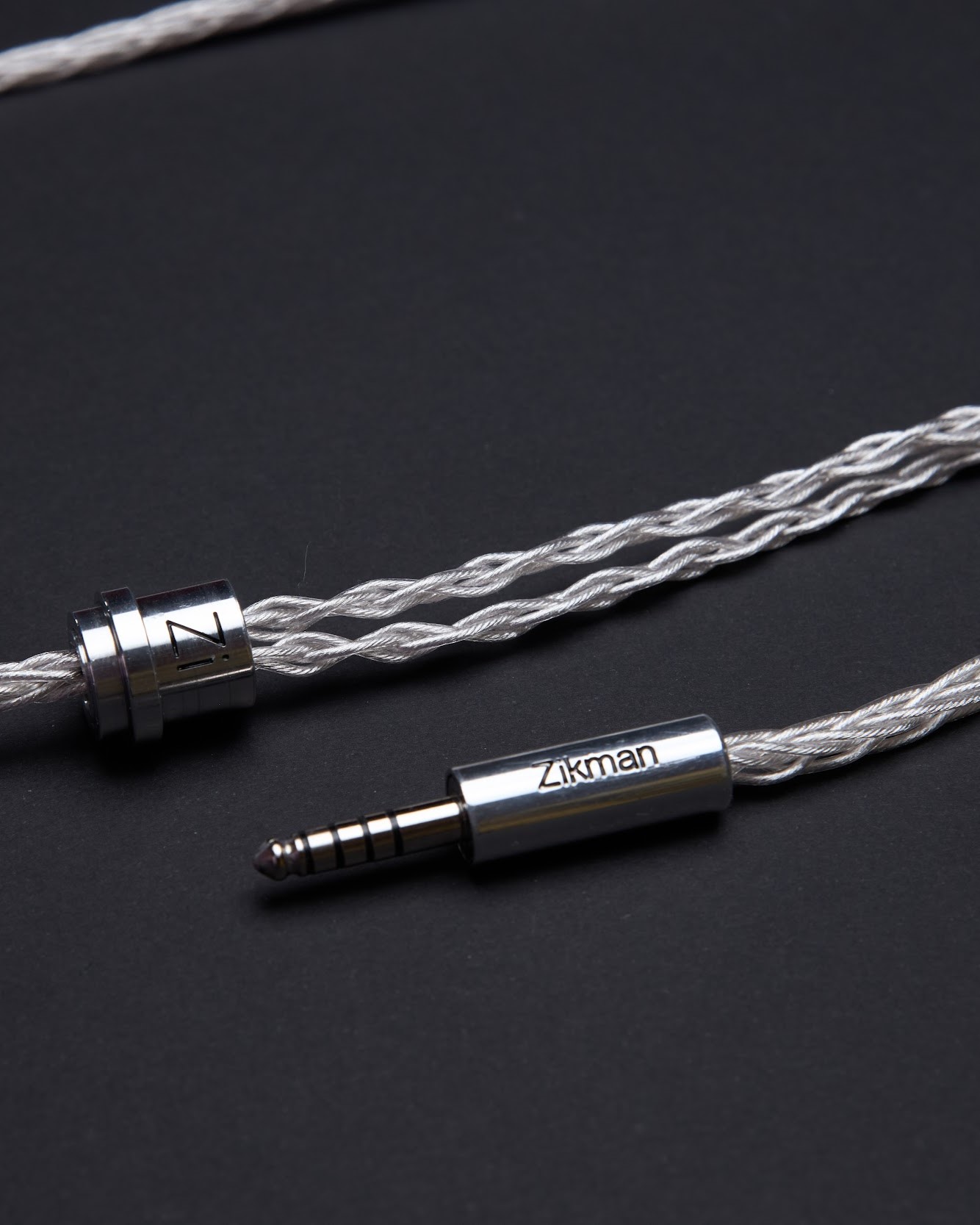
Palladium Coax Architecture — A New Conductor Platform for Zikman Full-Size Headphone Cables
- By zikman.audio
When Cable Design Is About More Than Just Materials
Most premium headphone cables are built around conductor materials: OCC copper, silver plating, precious metal alloys, or complex braiding.
However, in stationary hi-fi systems, conductor architecture becomes just as important as the material itself — including geometry, signal path stability, and behavior around surrounding electronics.
Home audio systems often include amplifiers, DACs, linear power supplies, AC cables, and other electronic devices positioned close to the headphone cable. In these conditions, resistance to external electromagnetic interference and signal stability become especially important.
That is why, when developing a new platform for Zikman full-size headphone cables, we focused not only on conductor materials, but also on the conductor architecture itself.
This led to the creation of Palladium Coax Architecture — a hybrid conductor platform with coaxial geometry designed for home hi-fi systems and high-end full-size headphones.
What Is Palladium Coax Architecture
At the core of the design is a multi-layer hybrid architecture where the central conductor and outer conductive layer are made from different materials and function together as two parts of the same signal path.
The central conductor is made from 6N OCC single-crystal copper with silver plating.
Its structure includes:
- 4 conductors;
- 48 strands in each conductor;
- 0.07 mm strand diameter;
- total equivalent gauge of 25 AWG.
The outer conductive layer is made from a gold-silver-palladium copper alloy.
It consists of:
- 64 strands with a 0.1 mm diameter;
- an outer conductive layer surrounding the central core;
- a full coaxial structure around the signal conductor.
In this design, the outer layer simultaneously functions as the second conductor within the audio signal chain.
Why Coaxial Geometry Matters
Most headphone cables use a parallel conductor layout.
In a coaxial structure:
- the central conductor carries the primary signal;
- the outer conductive layer surrounds it along the entire length;
- insulation separates both conductive sections.
This type of geometry is widely used in signal transmission because of its structural stability and resistance to external electromagnetic interference.
For stationary headphone systems, this becomes especially relevant, as the cable is often positioned near power supplies, amplifiers, AC cables, and other electronics.
In Palladium Coax Architecture, the outer conductive layer helps reduce the influence of external interference around the central signal conductor and maintain more stable signal transmission.
The Zikman Engineering Approach
When developing this conductor platform, the goal was not to artificially alter headphone tonality, but to focus on transmission stability, control, and overall system coherence.
In high-resolution systems, conductor geometry, implementation quality, and cable architecture become just as important as the conductor materials themselves.
That is why Palladium Coax Architecture was designed as a complete engineering system where conductor materials, geometry, and construction work together as a unified platform.
Construction and Materials
The conductor uses a dual-layer insulation system:
- inner insulation made from TPE;
- outer jacket made from PVC.
The total outer diameter is 3.6 mm.
Compared to typical lightweight IEM conductors, this structure feels more substantial and premium while still maintaining enough flexibility for comfortable everyday use with full-size headphones.
Technical Specifications
Zikman Palladium Coax Architecture
- Construction type: hybrid coaxial architecture
- Central conductor: silver-plated 6N OCC copper
- Central structure: 4 × 48 strands × 0.07 mm
- Central conductor gauge: 25 AWG
- Outer conductive layer: gold-silver-palladium copper alloy
- Outer structure: 64 strands × 0.1 mm
- Inner insulation: TPE
- Outer jacket: PVC
- Outer diameter: 3.6 mm
A New Step in Zikman Full-Size Cable Development
Palladium Coax Architecture was developed for stationary headphone systems where signal stability, implementation quality, and conductor geometry matter just as much as the conductor materials themselves.
The combination of coaxial architecture, hybrid conductor layering, and multi-layer geometry creates a platform focused on stable signal transmission, control, and long-term system reliability.

We will answer all your questions about IEM cables and help you determine exactly what you need